The greatest error in corporate asset management is treating physical assets as decaying expenses; the greatest opportunity is managing them as a high-performance investment portfolio designed for appreciation.
- Standard tax depreciation models are a financial fiction that masks the real, accelerated value loss caused by operational neglect.
- Building a verifiable « asset pedigree » through systematic maintenance is the key to commanding premium resale values, directly countering depreciation.
Recommendation: Shift your focus from merely tracking assets to strategically controlling their value curve through superior maintenance, calculated ownership models, and mathematically timed liquidation.
For any Director of Operations or Facilities, the relentless depreciation of heavy machinery and commercial property feels like an immutable law of physics. The balance sheet shows a steady, predictable decline in value, a cost of doing business managed through spreadsheets and tax allowance schedules. The conventional wisdom is to simply run equipment until it becomes too expensive to repair, then replace it. This approach, while common, is fundamentally flawed. It treats millions in capital equipment not as a valuable, manageable portfolio, but as a consumable expense.
The conversation often revolves around mitigating costs through reactive repairs or navigating the complexities of leasing agreements. But what if the entire framework is wrong? What if, instead of just slowing down the inevitable decay, you could actively engineer predictable, tangible asset appreciation? The secret isn’t found in accounting tricks but in adopting the mindset of a portfolio manager. It requires a strategic shift from viewing maintenance as a cost centre to seeing it as an investment in an asset’s future value—its ‘pedigree’.
This article reframes the entire challenge of asset management. We will move beyond the platitudes of « preventive maintenance » and explore the financial mechanics of value creation. We will dissect why standard depreciation is a poor guide to reality, establish a framework for building tangible equity in your physical assets, and determine the mathematically optimal moment to liquidate. By treating your machinery and facilities with the same strategic rigour as a financial portfolio, you can unlock significant, often overlooked, value and strengthen your company’s balance sheet in the process.
This comprehensive guide provides a strategic roadmap for transforming your approach to physical asset management. Below is a summary of the core strategies we will explore, from deconstructing depreciation myths to implementing advanced, value-driven facility management.
Summary: A Strategic Guide to Tangible Asset Appreciation
- Why Do Unmaintained Corporate Assets Depreciate Faster Than HMRC Guidelines?
- How to Implement Preventative Maintenance to Preserve Equipment Resale Value?
- Leasing Commercial Equipment vs Outright Purchasing: Which Builds Genuine Wealth?
- The Facility Neglect Mistake That Destroys Property Valuation By 15%
- When Is the Mathematically Optimal Moment to Liquidate Depreciating Machinery?
- Why Do Outdated Heating Systems Cost Commercial Buildings Thousands in Wasted Capital?
- Why Does Renting a Premium Office Long-Term Destroy Your Balance Sheet Strength?
- How to Achieve Massive Facility Overhead Reduction Without Downsizing Premises?
Why Do Unmaintained Corporate Assets Depreciate Faster Than HMRC Guidelines?
The single most dangerous assumption in asset management is that tax depreciation reflects real-world value. According to UK tax regulations, assets in the main pool are subject to an 18% annual writing down allowance rate. This provides a neat, linear model for accounting purposes, but it creates a fiction that lulls managers into a false sense of security. In reality, an unmaintained asset does not lose value linearly; it falls off a cliff.
This divergence between « paper value » and market reality stems from a phenomenon known as a component failure cascade. A minor, unaddressed issue—a worn seal, a misaligned belt—doesn’t just exist in isolation. It introduces vibration, excess heat, or strain, which in turn accelerates the wear on adjacent components. This chain reaction remains invisible until a critical failure occurs, by which point the asset’s real market value has plummeted far beyond the tidy 18% suggested by tax guidelines. The true depreciation rate for neglected machinery can easily reach 25-40% annually once this cascade begins.
The following table, based on market observations and regulatory frameworks, illustrates this critical distinction. It highlights how the simplified, fixed-rate assumptions of tax accounting fail to capture the exponential value destruction that occurs in the absence of a strategic maintenance program, a concept we term Capital Leakage.
As confirmed by a government analysis on the differences between accounting methods, the gap between tax rules and physical reality is a major risk. An asset’s book value can become dangerously detached from its actual liquidation value if operational realities are ignored.
| Depreciation Type | Annual Rate | Basis | Reality Check |
|---|---|---|---|
| HMRC Main Pool | 18% | Fixed regulatory rate | Linear assumption, ignores reality |
| HMRC Special Rate | 6% | Long-life assets | Ignores maintenance impact |
| Actual Unmaintained Asset | 25-40% | Market observation | Exponential after failure point |
How to Implement Preventative Maintenance to Preserve Equipment Resale Value?
Preventative maintenance is often discussed as a cost-saving measure, and research confirms it can save companies as much as 18% on maintenance costs. However, its most profound impact is on the other side of the ledger: value preservation and appreciation. The key is to shift from seeing maintenance as a chore to viewing it as the process of building an asset’s « pedigree. » A machine with a verifiable, complete, and high-quality service history is fundamentally a different, more valuable product on the secondary market than one without.
Building this pedigree is not about simply ticking boxes. It requires a systematic approach that documents every aspect of the asset’s life, proving its condition and the quality of its care. This includes tracking not just service intervals but the specific parts used (OEM vs. generic), the certifications of the technicians performing the work, and the training history of its operators. The goal is to create an irrefutable narrative of superior care that justifies a premium price at liquidation.
This system transforms maintenance from an operational expense into a strategic investment in the asset’s terminal value. Certifications like ISO 55000 for asset management can further formalize this process, turning your company’s reputation as a « Tier-1 Maintainer » into a tangible financial advantage. Implementing this system requires discipline but pays dividends by directly boosting resale value.
Your Action Plan: Building an Ironclad Asset Pedigree
- Asset Documentation: Inventory all critical assets, compiling manufacturer-recommended maintenance schedules, tolerances, and operational best practices as a baseline.
- Criticality-Based Scheduling: Prioritize assets based on their impact on operations and their resale value. Assign maintenance schedules accordingly (e.g., quarterly for critical HVAC, weekly for high-use production machinery).
- Verifiable Logging: Implement a digital, third-party verifiable maintenance log. Track every service, part used (specifying OEM vs. aftermarket), technician involved, and date of service.
- Cosmetic Integrity Program: Establish and follow a schedule for cosmetic upkeep. This includes regular cleaning, detailing, repainting, and minor damage repair to maintain a « like-new » appearance that signals underlying quality.
- Reputation Building: Document your superior maintenance practices. Pursue formal certifications like ISO 55000 and create internal case studies demonstrating the longevity and reliability of your equipment to use as marketing material during liquidation.
Leasing Commercial Equipment vs Outright Purchasing: Which Builds Genuine Wealth?
The « lease versus buy » decision is one of the most pivotal in asset management, yet it’s often framed purely as a question of cash flow and tax deductions. This limited view overlooks the most critical factor: building long-term wealth. Leasing is an operational expense that permanently drains capital from your business. Purchasing, when managed correctly, is an investment that converts cash into a tangible asset with the potential for appreciation, thereby strengthening your balance sheet.
When you lease, you are effectively paying off someone else’s asset. At the end of the term, you are left with nothing but receipts. When you purchase, you gain control over the asset’s entire value curve. Every maintenance action, every upgrade, and every careful operational choice directly contributes to an asset you own. This ownership allows you to benefit from the « asset pedigree » you’ve built, capturing a higher resale value at a liquidation point of your choosing.
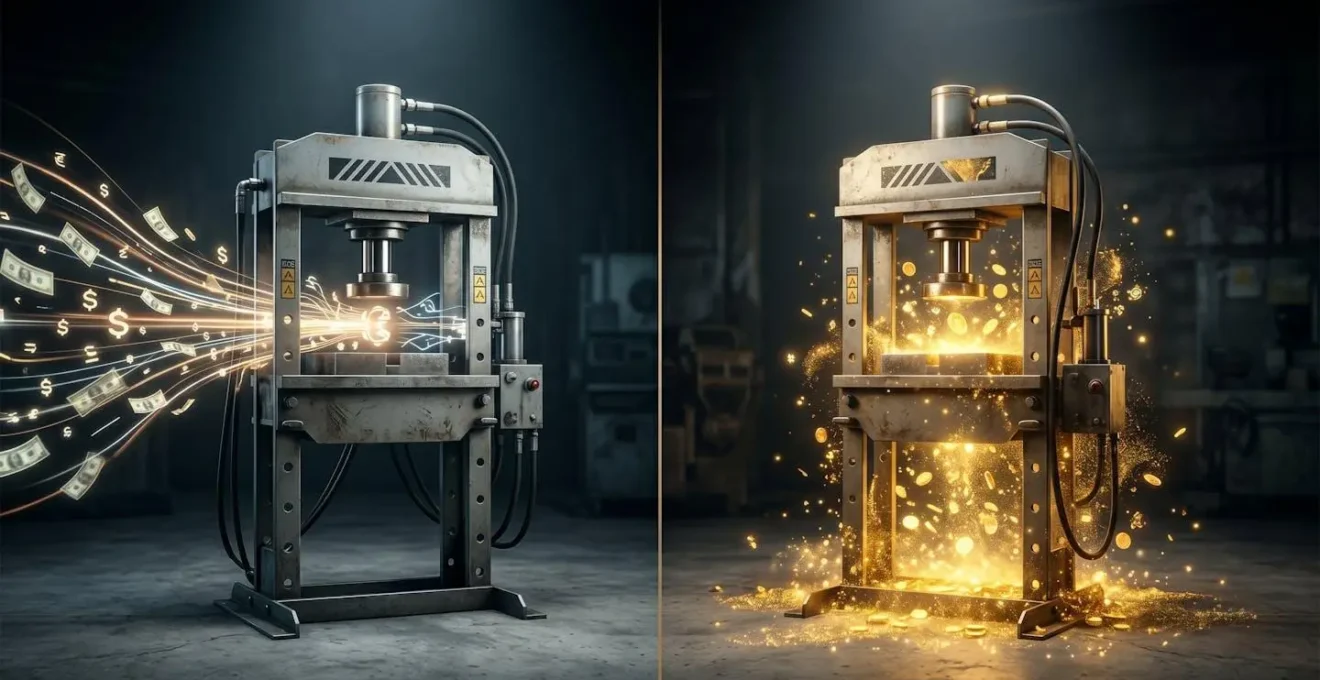
As the visualization shows, leasing represents a constant outflow of capital, while ownership creates a foundation for building equity. This strategic control is the essence of treating assets like a portfolio. As noted by industry analysts, the ultimate advantage of ownership is the power to manage an asset’s financial trajectory. An insightful observation from the 2024 EAM Market Trends Report puts it perfectly:
Control over the Asset’s Value Curve: Purchasing grants the owner the opportunity to generate a return through superior maintenance and strategic liquidation.
– Enterprise Asset Management Industry Analysis, 2024 EAM Market Trends Report
The Facility Neglect Mistake That Destroys Property Valuation By 15%
While machinery depreciation is often top of mind, the silent value killer in many enterprises is facility neglect. Deferred maintenance on a commercial property is not a linear cost; it’s a snowball effect that can trigger catastrophic value loss. A small, seemingly manageable problem, if ignored, can cascade into a foundational crisis that devastates a property’s appraisal value. This isn’t just about the cost of repairs; it’s about the destruction of the asset’s core worth.
The principle of deferred maintenance cost multiplication dictates that the cost to fix an issue later is often an order of magnitude higher than addressing it early. A minor roof leak that could be patched for a few hundred dollars can lead to saturated insulation, mold growth, and eventually structural water damage requiring tens of thousands in remediation. By the time the issue is unavoidable, the property’s market value has already taken a significant hit.
Furthermore, this neglect contributes to what is known as Functional Obsolescence. A building may be structurally sound, but if its core systems—HVAC, data cabling, lighting—are outdated and poorly maintained, it becomes unsuitable for modern tenants. This forces massive valuation discounts at sale or requires huge capital investment to modernize, all because of a series of small neglects over time.
Case Study: The Deferred Maintenance Snowball Effect
A commercial property owner deferred the repair of several minor roof leaks, estimated at a few thousand dollars. Over two years, water penetrated the roof structure, leading to widespread mold and compromising key structural supports. The eventual remediation cost exceeded $150,000. More critically, an independent appraisal conducted for a potential sale reduced the property’s valuation by 15% specifically citing the structural damage and the « evidence of long-term neglect, » which signaled higher future risk to the buyer.
When Is the Mathematically Optimal Moment to Liquidate Depreciating Machinery?
Deciding when to sell a piece of equipment is often driven by gut feeling or immediate replacement needs. However, a portfolio manager doesn’t guess; they calculate. The optimal moment to liquidate a depreciating asset can be determined mathematically by identifying the Total Cost of Ownership (TCO) Inflection Point. This is the precise moment when it becomes more expensive to continue holding the asset than to sell it and reinvest the capital.
The TCO is not just the purchase price. It’s a comprehensive figure that includes the sum of all costs over the asset’s life. To find the inflection point, you must track three key financial curves:
- Rising Maintenance Costs: The year-over-year increase in repair expenses, parts, and labour. This curve almost always accelerates as an asset ages.
- Lost Productivity Costs: The financial impact of increased downtime, reduced output speed, or lower quality. This represents the opportunity cost of retaining an aging asset.
- Declining Resale Value: The asset’s depreciation curve on the open market, which can be tracked through bi-annual valuations.
The inflection point occurs when the combined total of these three escalating costs hits its lowest point before starting to rise. Continuing to hold the asset beyond this point means your total expenses will begin to outpace the value you derive from it. Selling at or just before this point maximizes your net return.
This data-driven approach removes emotion and institutional habit from the decision-making process. It transforms liquidation from a reactive necessity into a proactive, strategic financial move. Timing this liquidation with market cycles—for instance, selling construction equipment in the spring when demand is highest—can add a further 10-20% premium, fully optimizing your return on the asset.
Why Do Outdated Heating Systems Cost Commercial Buildings Thousands in Wasted Capital?
An outdated HVAC system is one of the most significant sources of « Capital Leakage » in a commercial facility. It functions as a hidden financial drain, silently siphoning thousands of dollars from the enterprise every month through multiple, often unmeasured, avenues. While a high energy bill is the most obvious symptom, it represents only a fraction of the total cost. The true damage to the balance sheet is far greater.
First, there’s the direct financial drain. Older systems are notoriously inefficient, consuming vast amounts of energy to achieve the same climate control as a modern unit. They are also prone to frequent breakdowns, leading to high, unpredictable maintenance and repair costs. But the indirect costs are even more insidious. Poorly regulated temperatures and air quality have a direct, negative impact on employee productivity and well-being. An uncomfortable work environment leads to distraction, reduced output, and even increased sick days, representing a massive hidden cost in lost labour value.
Investing in a modern, efficient HVAC system is not an expense; it’s a strategic move to plug a major source of capital leakage. The ROI is delivered not just through lower energy and maintenance bills, but through a measurable uplift in employee productivity and a reduction in facility-related downtime. The following analysis, based on industry data, highlights the dramatic difference in financial performance between legacy and modern systems.
This comparison, based on an enterprise asset management blog’s comparative analysis, demonstrates how a modern system doesn’t just cut costs—it generates a positive return through enhanced productivity, effectively paying for itself over time.
| System Type | Monthly Energy Cost | Maintenance Cost | Productivity Impact | Capital Leakage Rate |
|---|---|---|---|---|
| 20+ Year Old System | $8,500 | $2,200 | -12% employee output | $15,840/month |
| Modern Efficient System | $4,200 | $650 | +5% employee output | $3,950/month saved |
| Smart Building Integration | $3,100 | $450 | +8% employee output | $5,200/month saved |
Why Does Renting a Premium Office Long-Term Destroy Your Balance Sheet Strength?
For many companies, renting a premium office space seems like a flexible, capital-light decision. It avoids a large upfront investment and outsources facility management. However, over the long term, this strategy systematically destroys balance sheet strength by sacrificing the single most powerful wealth-building tool available to an enterprise: real estate equity. A 20-year lease is a 20-year commitment to paying off someone else’s mortgage, leaving your own company with zero tangible assets to show for it.
While the monthly rent payment appears as an operational expense on the income statement, its true impact is on the balance sheet. Every payment is 100% capital outflow with 0% equity return. In contrast, a mortgage payment on a purchased property is split between interest (an expense) and principal (an equity-building investment). Over time, this principal portion builds a multi-million-dollar asset that anchors the company’s financial stability, provides collateral for future financing, and can be liquidated for a significant capital gain.
A financial analysis of a 20-year rent-versus-own scenario is stark. A company that purchased its facility was shown to have built $3.2 million in equity over two decades. The long-term renter built zero. The argument for flexibility in renting often overlooks the flexibility that ownership provides, such as the ability to sublet unused space to generate additional revenue streams. Opting for a long-term lease is a strategic decision to forgo one of the most reliable methods of corporate wealth creation in exchange for short-term convenience.
This isn’t to say leasing is never appropriate, particularly for startups or businesses in volatile markets. However, for established enterprises with stable long-term plans, extended renting is a direct drain on financial strength, a continuous transfer of your company’s wealth to your landlord’s portfolio.
Key Takeaways
- Shift Your Mindset: Stop treating assets as expenses. Manage your equipment and facilities as a high-performance investment portfolio with the primary goal of appreciation.
- Build Asset Pedigree: Implement a rigorous, verifiable maintenance and documentation system to create a « pedigree » that commands a premium price at liquidation.
- Calculate, Don’t Guess: Use the Total Cost of Ownership (TCO) Inflection Point to determine the mathematically optimal moment to sell an asset, maximizing your net return.
How to Achieve Massive Facility Overhead Reduction Without Downsizing Premises?
The traditional response to high facility overheads is downsizing—a disruptive and often morale-damaging process. However, a forward-thinking, portfolio-based approach reveals a powerful alternative: transforming your facility into a « smart building. » This strategy focuses not on reducing your footprint, but on radically increasing its efficiency and even turning cost centres into revenue streams. This is the ultimate expression of active asset management.
A smart building integrates technology across all facility systems to optimize performance in real-time. This begins with installing IoT (Internet of Things) sensors on critical infrastructure like HVAC, lighting, and plumbing. These sensors feed data into an AI-driven platform that can predict failures before they happen, enabling a shift from scheduled maintenance to far more efficient, just-in-time, sensor-triggered repairs. This alone can slash maintenance costs by over 30%.
But the strategy goes further. By installing solar panels and optimizing energy use based on real-time occupancy and weather data, a building can move from being an energy consumer to a net energy producer, selling excess power back to the grid. Waste management can also be transformed. Instead of paying for disposal, a « Waste-as-Resource » program identifies valuable recyclables (like metals or specific plastics) and negotiates direct contracts, turning trash into cash. Through Maintenance, Repair, and Operations (MRO) optimization, businesses can see a massive impact; for many, MRO can constitute as much as 40% of a business’ annual procurement budget, offering huge potential for savings.
By implementing these interconnected strategies, it’s possible to achieve dramatic overhead reductions without sacrificing a single square foot of space. It redefines the facility from a static, costly asset into a dynamic, high-performance component of your investment portfolio.
To put these strategies into practice, the logical next step is to conduct a full audit of your current asset lifecycle management, identify the biggest sources of capital leakage, and build a business case for investing in a value-driven maintenance and ownership model.
Frequently Asked Questions on Enterprise Asset Appreciation
What are the hidden costs of poor facility maintenance beyond repair expenses?
The hidden costs are substantial and include productivity loss from employees working in an uncomfortable environment (too hot, too cold), increased sick days resulting from poor air quality, higher insurance premiums due to perceived risk, and significant reputational damage from being seen as an outdated or poorly run facility.
How does deferred maintenance create exponential cost increases?
Small issues compound exponentially, not linearly. For example, a minor roof leak allows water ingress, which promotes mold growth. The mold degrades structural materials, which then requires foundational work. Each step in this chain reaction costs 10 times more to fix than the previous one, turning a small problem into a catastrophic expense.
What is Functional Obsolescence via Neglect?
Functional obsolescence occurs when a facility, despite being structurally sound, becomes unfit for modern business needs due to outdated or poorly maintained systems. This includes inadequate HVAC, slow data cabling, or inefficient lighting. This makes the property undesirable for modern tenants or buyers, forcing massive valuation discounts regardless of its physical condition.